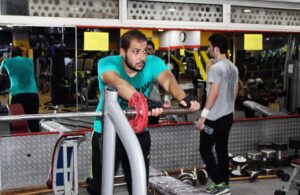
The clank of weights and the focused energy of a gym might seem a world away from the dynamics of a family home. Yet, the principles that build a strong, effective partnership in the weight room are surprisingly similar to those that create a secure and loving environment at home. The role of a spotter—someone who supports a lifter during an exercise—is built on a foundation of trust. This trust, essential for physical safety under a heavy barbell, mirrors the emotional safety required for a healthy relationship to thrive. Exploring this connection reveals how lessons learned in the gym can have a profound impact on our lives outside of it.
The unspoken contract of the spotter
When you ask someone to spot you, you are entering into an unspoken contract. You are placing your physical well-being in their hands, trusting them to intervene at the precise moment you need help. This requires clear communication, attentive observation, and a shared understanding of the goal. The spotter must be present and focused, ready to act without hesitation. This act of vulnerability from the lifter and the dependable response from the spotter strengthens a bond. It is a powerful exchange, demonstrating that you can rely on someone else when you are at your limit. This is not just about preventing injury; it is a practical exercise in building and reinforcing trust.
Translating physical support to emotional security
This concept of dependable support translates directly to our relationships at home. Emotional safety is the feeling that you can be your authentic self with your partner or family without fear of judgment, ridicule, or dismissal. It is the belief that when you are vulnerable—sharing a fear, a failure, or a difficult emotion—the other person will "spot" you. They will listen with empathy, offer support, and help you carry the emotional load, rather than letting it crush you. Just as a good spotter watches for signs of struggle in the gym, an emotionally supportive partner pays attention to your emotional state, ready to offer encouragement and assistance when you need it most.
Communication is key on and off the gym floor
Effective spotting relies on clear communication. The lifter might indicate how many repetitions they are aiming for, and the spotter confirms they understand their role. Similarly, in a relationship, open and honest communication is the bedrock of emotional safety. It involves expressing your needs, fears, and boundaries, and actively listening to your partner do the same. When communication breaks down, trust erodes. In the gym, a distracted spotter can lead to injury. At home, a partner who isn't truly listening can lead to feelings of isolation and emotional neglect. Practising clear communication in a low-stakes environment like the gym can build skills that are invaluable in the more complex landscape of a long-term relationship.
Building resilience together
Consistently training with a reliable partner does more than just build muscle; it builds mutual confidence and resilience. You learn that it is okay to push your limits and even fail, because you have a support system in place. This shared experience creates a powerful sense of "we." In the same way, navigating life's challenges with a partner who provides consistent emotional support builds relational resilience. Knowing you have someone in your corner who will help you up when you fall gives you the courage to take on bigger challenges, both individually and as a couple. The security of being caught fosters the bravery to try again, stronger than before.
From the squat rack to the living room
The lessons from the weight room are clear. Trust is not an abstract concept; it is forged through action and reliability. The physical safety provided by a spotter is a tangible representation of the support we all crave in our personal lives. By being a dependable partner in the gym, we practise the very skills needed to be a source of emotional safety at home. It is about being present, attentive, and ready to lend your strength when it is needed most. Whether the weight is made of iron or emotion, the principle remains the same: a strong partnership is built on the certainty that someone has your back.